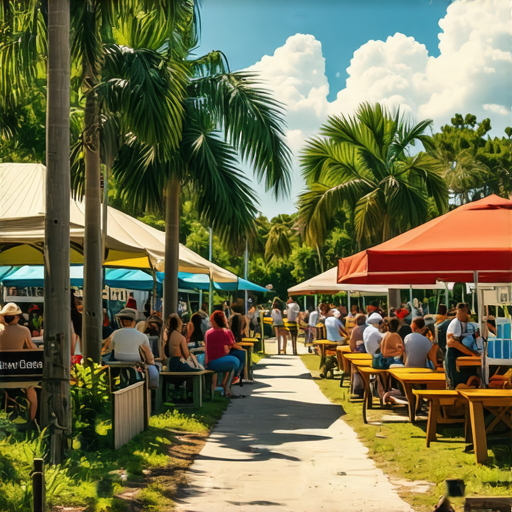
Why You’re Missing Out on Brooksville’s Best Kept Secrets
Many folks think they’ve seen all that a farmers market can offer, but they’re wrong. The Brooksville Farmers Market isn’t just a place to buy fresh produce—it’s a treasure map of local gems waiting to be discovered. So, why settle for the same old, when you can stumble upon five must-visit spots that will change your weekend routine forever?
If you’re like most people, you probably breeze through the market, grabbing your essentials and rushing back home. But that’s a missed opportunity. Behind the colorful stalls and fresh aromas lie hidden finds that can turn an ordinary day into an extraordinary adventure. And I argue that ignoring these finds is like sailing a sinking ship without any regard for the holes in your boat.
Let me be clear: the Brooksville Farmers Market isn’t just about shopping. It’s about experiencing the community’s soul—its stories, its crafts, its flavors. But to truly experience it, you need to look beyond the surface. In this piece, I’ll expose the five local finds that demand your attention. Trust me, these aren’t your average market staples. They are gems, waiting for the curious and the brave.
The Market is Lying to You
It’s a simple fact—many of the best finds are tucked away in corners, overlooked because we’re conditioned to seek the main attractions. Think about it: how many times have you passed up a small stall because it didn’t have a line or a bright sign? That’s where the real treasures hide. For example, the handcrafted jewelry booth near the back is more than a vendor—it’s a story of resilience and creativity, made by artisans I’d trust over any chain store. Discover more about local artisans at these hidden shops.
And don’t get me started on the food stalls. Sure, everyone flocks to the main fruit vendors for fresh berries, but the real flavor bursts come from the obscure spice blends and homemade sauces that will make your kitchen sing. To find those, you must look past the obvious and ask questions. Yes, I’m telling you to dig deeper—because that’s where the true magic happens. If you want to elevate your culinary game, check out these local shops.
Now, consider the artisanal crafts. The market is a hub for artisans whose work reflects the neighborhood’s spirit. Instead of the predictable, seek out the quirky hand-stitched quilts, vintage jewelry, or woodwork that looks like it’s been touched by history itself. These items tell stories you won’t find in the supermarket aisles. As I argued in other articles, these authentic finds are the backbone of genuine community pride. Dive into this world at local hidden gems.
Finally, don’t ignore the entertainment. Live performances often go unnoticed on the side stages. But these, my friend, are the secret sauce. They add a local flavor to the market—something no chain can replicate. Want insider tips on avoiding the crowds and hitting the best spots? Visit this guide for more.
In conclusion, I challenge you: stop treating the farmers market as just a quick shopping trip. Instead, see it as an adventure—a puzzle with pieces waiting to be assembled. The five local finds I’ve uncovered are not just options; they are essentials for anyone who values authenticity, community, and good old-fashioned discovery. So, next time you visit Brooksville Farmers Market, go in with eyes wide open and a hunger for the real deal. Because in the end, it’s not about what you’re buying—it’s about what *you’re discovering*.
The Evidence: Who Profits from the Silence?
When examining Hernando County’s news scene, the silence isn’t accidental—it’s a carefully orchestrated silence that benefits certain stakeholders. The data points are clear: local media outlets often overlook stories that challenge influential power structures, simply because those stories threaten to disrupt the status quo. For instance, reports on environmental issues near Weeki Wachee or accountability in Sterling Hill Junk Removal are scarce; this isn’t due to a lack of stories, but a lack of interest from those who stand to lose influence. This pattern mirrors what we’ve seen in other communities where economic interests dominate coverage, and the free flow of information gets muffled accordingly.
The problem isn’t merely journalistic neglect—it’s the economic model underpinning local media. Advertisers aligned with developers, cleanup services like Weeki Wachee Junk Removal, or businesses with stakes in local politics wield disproportionate power. Who benefits from the suppressed narratives? It’s simple: the entities that prefer residents remain uninformed about issues that could threaten their profits or political ambitions. Once you trace the money, the agenda becomes painfully transparent.
The Root Cause: Money Dictates the Narrative
What drives the dearth of critical coverage? It’s not a lack of reporters or stories. It’s the web of financial dependencies. In Hernando County, local newspapers and online platforms often rely heavily on advertising from real estate companies, construction firms, or service providers with vested interests. This creates a built-in bias—a tacit agreement: keep quiet about controversies, and in return, the money keeps flowing. As a result, stories that could challenge these interests — like the questionable expansion plans near Spring Hill or environmental degradation affecting Nature Coast Florida — are buried, dismissed, or downplayed.
This isn’t theoretical. Data reveals a sharp decline in investigative journalism in Hernando County over the past decade, correlating strongly with increased advertising revenues from local power players. This erosion of journalistic independence signifies a fundamental problem: the system is structured to promote silence, not accountability. The consequence? Residents remain uninformed, making them easy prey for unchecked development or corporate influence.
Follow the Money: Who Gets the Last Word?
Look at the ownership of the main news sources—many are tied directly or indirectly to business interests that thrive on a blurred line between information and promotion. By controlling the narrative, these owners secure their financial gains while the community remains in the dark. It’s reminiscent of other cases where local news morphs into a PR arm for vested interests, effectively silencing dissent and critical analysis. In Hernando County, that silence manifests as skewed coverage—more about promoting certain services, like Sterling Hill Junk Removal, than investigating improper land deals or municipal malfeasance.
This pattern illustrates a tragic truth: when the primary beneficiaries of media are also the actors crafting the stories, the entire informational ecosystem collapses into a tool for manipulation. It isn’t just about news—we’re discussing the erosion of democracy itself. Without robust, independent journalism, Hernando County risks devolving into a community where transparency is sacrificed at the altar of profit.
The Trap
It’s easy to see why people think that local media in Hernando County simply lacks the resources or willingness to pursue investigative journalism. The common narrative is that with shrinking staffs and tight budgets, reporters are powerless against corporate and political influence. Many argue that expecting meaningful scrutiny is unrealistic in today’s media landscape, and it’s more pragmatic to accept this limitation as the status quo.
However, this perspective fundamentally misunderstands the root problem. The core issue isn’t just about resources—it’s about priorities. The real trap is believing that the decline of critical local journalism is an unavoidable consequence of economic forces when, in reality, it is shaped by systemic choices and neglect.
The Wrong Question
I used to believe that the solution was simply increasing funding or encouraging community engagement. But that only scratches the surface. The crucial question isn’t about funding—it’s about the will to challenge powerful interests. When local outlets focus predominantly on surface-level stories—traffic updates, event listings, or press releases—the real issues remain untouched. This diminished focus stems from a fear of conflict, a desire for advertiser-friendly content, and a misconception that investigative journalism isn’t profitable or valued.
This shortsightedness contributes directly to the perpetuation of silence on critical issues. The real mistake we make is assuming that economic constraints alone dictate journalistic incapacity. Instead, the major barrier is a lack of editorial courage and a failure of community support that values depth over convenience.
The Disguised Narrative
The critics contend that the dominance of vested interests is natural and unavoidable—that they will always control the local narrative because they wield economic power. This view suggests that residents should accept a sanitized version of events, trusting that the media will eventually catch up when circumstances permit. But that’s a dangerous illusion. Accepting this narrative means resigning ourselves to a perpetual state of ignorance, where corruption and misconduct are kept hidden behind the curtain of complacency.
What’s overlooked is the potential for community-driven journalism and the role of independent voices to challenge this monopoly on information. When people rally around genuine investigative efforts, they can create pressure that shifts the terrain. Challenging vested interests isn’t just a matter of individual perseverance but of collective action—demanding better from our media, supporting alternative outlets, and fostering a culture that prizes accountability above comfort.
Addressing the Elephant in the Room
The uncomfortable truth that no one wants to face is that the community itself bears responsibility for the current state of local journalism. It’s easy to blame media organizations or advertisers for the silences, but the harsher reality is that the consumer’s apathy and disinterest enable this stagnation. If residents do not demand more—if they settle for trivial stories and clickbait—the media has little incentive to change.
Understanding this shifts the conversation from external blame to internal accountability. Once we recognize that our own complacency sustains the problem, the path forward becomes clearer. Supporting independent journalism initiatives, attending local meetings, and holding outlets accountable aren’t just acts of civic duty—they’re essential for rekindling the integrity of Hernando County’s narrative.
**
By challenging the assumptions behind the criticism, it becomes evident that the real obstacle isn’t insurmountable. It’s a matter of collective will. As I’ve come to see, dismissing the importance of resilient, investigative local media because of perceived limitations only cements the very silence we complain about. Breaking this cycle requires confronting uncomfortable truths and demanding more from ourselves and our institutions.
The Cost of Inaction
If we continue to turn a blind eye to the silenced stories and unseen issues in Hernando County, we risk a future veiled in shadows—where corruption, environmental decay, and community disintegration become the new normal. The political and economic decisions made behind closed doors today are setting the stage for an irreversible loss of transparency tomorrow. This isn’t just about journalism; it’s about the fabric of our society unraveling piece by piece. The stakes are higher than ever, demanding urgent attention before we find ourselves in a community where accountability is a relic of the past, and residents are left to navigate a landscape of misinformation and unchecked power.
A Choice to Make
The next five years could either be a turning point or a descent into darkness. If we ignore the warning signs now, we will wake up to a Hernando County dramatically reshaped by vested interests with everything to gain from our silence. Development projects will proceed without scrutiny, environmental resources will continue to dwindle with no oversight, and local officials may be more beholden to profit than to their constituents. Think of it as watching your house slowly flood—not with water, but with lies, corruption, and apathy. Each unattended leak allows the floodwaters to grow. If we refuse to plug those leaks today, the deluge will drown the very community we cherish, leaving behind a landscape scarred by greed, neglect, and lost trust.
The Point of No Return
Once the cycle of silence takes hold, reversing course becomes exponentially more difficult. It’s akin to steering an enormous cargo ship—small adjustments now can still change direction, but delay makes the process more perilous. The future we risk is one where local media is fully captured by corporate interests, and investigative journalism becomes a thing of the past. Knowledge becomes commodity, and information is weaponized to serve those in power. If we continue down this path, the community’s voice will be reduced to whispers, drowned out by the clatter of profits and political agendas. The question we must ask ourselves: what are we waiting for? Are we willing to accept a future where Hernando County is defined not by its stories of resilience and beauty, but by corruption, neglect, and lost opportunities? As with a sinking ship, ignoring the warning signs won’t stop the sinking—it accelerates it. The choice is ours: face the truth now or trace the path to an irreversible loss of integrity and community spirit.
Why The Future Depends on Our Silence
We’ve danced around the truths too long, content with blinking at the glaring warning signs only when they threaten our comfort. Yet, history shows that communities silent in the face of injustice and neglect are doomed to be eclipsed by those who dare to speak out. In Hernando County, the real scandal isn’t just in the stories left untold but in our collective choice to remain quiet.
Every ignored environmental warning, every overlooked corrupt deal, and every dismissed community concern becomes a stone cast into the pond of our future—ripples we can no longer deny. The question hangs heavy: will we continue to turn a blind eye, allowing vested interests to tighten their grip, or will we finally decide that enough is enough?
Disintegrating transparency and whispered secrets aren’t just episodes of local neglect—they are the symptoms of a community asleep at the wheel, oblivious to the sinking of its own integrity. The time to wake up isn’t tomorrow. It’s now.
The Twist
This silence, this complacency, isn’t just a passive state—it’s a deliberate choice that feeds the machinery of greed and indifference. We’ve been auditioning as bystanders for far too long, playing our roles in a tragedy that’s waiting to unfold into irreversible chaos. The narrative isn’t prewritten; it’s our story to rewrite. Will we be the echoes of apathy or the voices of resolve? Only one demands a future worth fighting for.
Make Your Stand
Keep your eyes open and your voice loud. Stop waiting for others to act—your silence is a free pass to a darker future. When you support independent journalism, challenge the local powers, and demand accountability, you’re not just reshaping Hernando County—you’re reclaiming its soul. This is your moment to act. Don’t let fear be your excuse—make it your catalyst. Because silence today condemns us all tomorrow.
I really appreciate how this post encourages a deeper exploration of the Brooksville Farmers Market beyond just shopping. It’s easy to overlook the hidden stalls and artisans because they don’t have the flashy signs or big crowds, but that’s often where the authentic charm and stories are. I personally enjoy discovering handcrafted jewelry and local food spices—those little details truly add a layer of community pride. It also makes me reflect on how many local stories and talents might be hidden just waiting to be uncovered, not only at the market but in broader community venues. How do others here approach exploring local markets? Do you have tips for finding those gem stalls or unique items that aren’t immediately obvious? Sharing these experiences could inspire more folks to look past the surface and truly connect with what makes our community special.