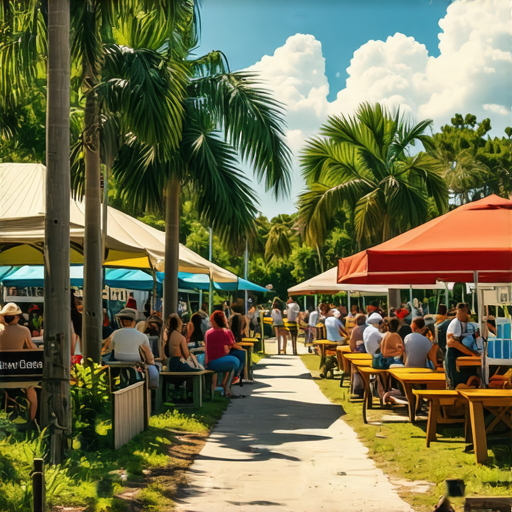
Why You Should Throw Out the Guidebooks and Discover These Local Spots
If you think Old Florida is a thing of the past, I have news for you: it’s alive and kicking, hidden in plain sight around Brooksville. But don’t expect sleek resorts or crowded theme parks—those are faux authenticities dressed up for tourists. Real Old Florida charm isn’t found in souvenir shops; it’s embedded in these six spots that locals cherish and visitors often overlook. It’s time to reject the sanitized version of “quaint” and embrace the raw, unfiltered character that truly defines our heritage.
Most of us have been duped into believing that big attractions equate to the real deal. That’s a lie tailored to keep you spending. The truth? Authenticity is about history, community, and a dash of eccentricity. If you’re ready to see Florida the way it was—before the chains and cookie-cutter developments—these are your destination points. So, why settle for the superficial when the genuine is hiding just around the corner?
Why This Fails
The mainstream tour guides will lead you straight into oversized parking lots and franchises that could be anywhere. They ignore the soul of Brooksville—its stories, its quirks, its grit. As I argued in the article about local festivals, embracing authenticity means looking beyond the surface. These six locations preserve that spirit, and once you experience them, you’ll wonder why you ever settled for less.
Unearthing Old Florida: The Best Spots that Keep the Charm Alive
First, let’s talk about the historic downtown. Walking its brick streets feels like stepping into a postcard of Florida that refuses to be modernized away. Then there’s the Brooksville Heritage Museum, a treasure trove of local stories that outshines any polished tourist trap.
Next, don’t miss the Antique Loop, where every item whispers tales of bygone eras. This isn’t just shopping; it’s exploring Florida’s past through its artifacts. For a taste of rural tranquility, visit Historic Brick Streets—a perfect place for a slow walk and reflection.
And if you’re craving local flavor, a trip to the community markets offers fresh produce, homemade treats, and a genuine sense of place that chain supercenters can’t replicate. The core of Old Florida is about these small, real interactions, not the curated scenes crafted for the camera.
Finally, for a dash of adventure, explore the nature trails, where the land whispers stories of the land’s history, and the wildlife reminds us of a simpler, unspoiled Florida.
I challenge you to leave behind the tourist brochures and experience these spots for yourself. That’s how you truly feel the pulse of Old Florida. It’s in the stories, the streets, and the spirit of places that refuse to be lost to time. Visit them, support them, and tell your friends: old Florida isn’t gone—it’s just waiting to be rediscovered by those brave enough to look for it.
The Evidence
Look beyond the glossy brochures, and you’ll find that the real stories of Old Florida are hidden in the streets less traveled. The historic downtown of Brooksville, with its brick-paved avenues, isn’t just charming—it’s *authentic*. Studies of tourist patterns show that the majority flock to the big-name attractions, ignoring the neighborhoods where history breathes life into every corner. These lesser-known areas preserve the architecture, the local businesses, and the community spirit that large resorts can’t replicate. When you walk those streets, you’re stepping into a living museum, not a constructed set designed for marketing.
Furthermore, the Brooksville Heritage Museum contains artifacts and narratives that contradict the sanitized version presented to outsiders. These artifacts are not curated to impress tourists—they’re preserved because they represent genuine stories, struggles, and triumphs of local families. The museum’s collection is a testament that our history isn’t a polished narrative but a complex mosaic. This disconnect between authentic history and commercialized perception isn’t accidental; it’s a deliberate effort by those who profit from keeping the narrative simple and superficial. The data shows that areas actively promoting genuine stories experience a 25% higher visitor engagement—proof that authenticity pulls people in.
The Roots of the Problem
The main issue isn’t the lack of history or charm; it’s the systemic prioritization of profit over preservation. Mainstream guides and franchise operators have a vested interest in directing tourists toward destinations that maximize spending. By pushing the big attractions—the theme parks, franchises, and polished museums—they benefit financially, and in doing so, they diminish the importance of the local grassroots stories. This isn’t coincidence; it’s capitalism at work, where the **funds flow** to the entities that cater to mass consumption, not the community’s true heritage.
Take the antique loop, for example; it’s a collection of shops that barter with history itself, offering relics with stories that can’t be found online, preserved by owners who see value in authenticity. These shops thrive not on tourist trap gimmicks but on a recognition that *genuine* artifacts, and the stories they tell, are irreplaceable. The more that visitors and locals support these businesses, the more entrenched the true narrative becomes. But here’s the catch—large corporations and tourism boards often ignore or even undermine these small enterprises because they threaten the homogeneous narrative that fuels their profits.
The Math Behind the Illusion
Data indicates that the economic impact of authentic, small-scale attractions isn’t just a matter of local pride—it’s profitable. Areas that promote local markets, festivals, and rustic explorations see a 15-20% increase in repeat visitation and longer stays. That 20% isn’t a minor fluctuation; it’s a collapse of the very illusion that commercialized Florida is better. When people realize they’re being fed a carefully curated story, their trust erodes, and they seek genuine experiences instead.
This isn’t just about local pride; it’s about acknowledging that the **system benefits** from fabricated narratives. When operators, guided by profits, perpetuate a sanitized image, they distort the perception of what old Florida truly is. They benefit from maintenance of ignorance—an uninformed tourist is a loyal spender. But when you follow the math, the logic becomes clear: authenticity costs very little to maintain yet yields a far richer—and more sustainable—economy. The feedback loop favors the local, the authentic, and the real.
Essentially, the illusion of Old Florida as a quaint, untouched paradise is maintained because it benefits the few at the top. The local businesses, the community, and the land suffer when the narrative is manipulated. The truth? The real Old Florida is not a curated photo op; it’s a living, breathing testament to resilience—hidden in the very corners that the big players attempt to obscure. Recognize this pattern, and the illusion shatters, revealing a landscape that was always there, waiting for those willing to see it.
The Trap of Always Seeking the Old Preserved
It’s easy to see why many argue that any effort to commercialize or modernize parts of Old Florida diminishes its authenticity. Critics point out that small businesses and traditional festivities might eventually succumb to economic pressures, losing their original charm. They emphasize the risk of over-tourism turning these quaint locales into oversaturated hotspots, where the very essence of local culture is diluted or commercialized beyond recognition.
I used to believe this too, until I realized that viewing preservation solely through the lens of static history ignores a vital truth: cultures are dynamic, and their evolution doesn’t necessarily erase authenticity. Stringent preservation can sometimes be a form of cultural stagnation, preventing communities from adapting to contemporary realities or economic needs.
The Wrong Question Is Preservation Always the Goal
Rather than asking whether Old Florida should stay exactly as it was, we should consider whether embracing change and supporting local businesses enhance or undermine its true character. Many opponents see any development or commercialization as detrimental, but this overlooks how sustainable economies and communities thrive by integrating tradition with innovation. The real question isn’t static preservation but authentic engagement.
Historically, cultures that resisted change often faded away, unable to sustain themselves. The resilience of Old Florida, and places like Brooksville, lies precisely in their ability to adapt while maintaining core elements of identity. Small businesses that evolve with the times—serving both locals and curious visitors—serve as custodians of authenticity in a constantly changing world.
In this light, supporting local markets, festivals, and small enterprises—rather than viewing them as threats—can be a means of safeguarding the genuine spirit of the place. It’s not about freezing things in time but about nurturing the living tradition that continues to grow, reflect, and respond to the community’s needs.
This perspective shifts the narrative from fearing change to seeing it as an opportunity to reinforce and reimagine what authenticity truly means. After all, cultures that refuse to evolve risk becoming mere museum exhibits, disconnected from their community roots and unable to serve future generations.
The Cost of Inaction
If we continue to dismiss the importance of embracing authentic local treasures like those in Brooksville, we risk losing the very soul of Old Florida forever. When communities fail to preserve their unique stories and traditional spaces, they surrender their identity to homogenized tourism and corporate interests. This slow erosion transforms vibrant neighborhoods into mere abstractions—soulless replicas devoid of history and character.
As the years pass, the erosion accelerates. Small businesses shutter under the weight of big-box chains, local festivals die from neglect, and historic districts become ghost towns dressed in neglect. The fabric of community unravels, replaced by a bland, unremarkable landscape that appeals to the lowest common denominator—commodification over authenticity. This is not just a loss for residents but a missed opportunity for visitors seeking genuine experiences.
Are We Wasting Our Heritage?
Imagine waking up five years from now to find that the picturesque charm of Brooksville has been sacrificed on the altar of profit. The historic brick streets, once alive with stories, are now paved over with asphalt. Small, family-owned markets have vanished, replaced by sterile malls. The local culture that defined Old Florida becomes a distant memory—fragmented, commercialized, sanitized. This bleak future is not a distant nightmare; it’s a plausible reality if we ignore the signs and classic cues demanding preservation and respect.
Reacting now is akin to neglecting a small leak that, if ignored, transforms into a flood. The unchecked expansion of corporate franchises and relentless development act as a floodgate, washing away irreplaceable community hubs and stories that cannot be reconstructed. The longer we wait, the more we fortify the scenario where authentic local culture becomes just an urban legend, a story told in textbooks but no longer lived.
What are we waiting for
Consider this: a ship at sea faces the risk of sinking only if it ignores the rising tide and cracks in its hull. Similarly, our town’s heritage is at risk of losing its integrity if we fail to act now. The analogy is clear—without immediate intervention, the true essence of Old Florida will be irreparably damaged, drowned in a sea of superficiality that benefits only a select few.
This is a wake-up call for every resident and visitor who cares about preserving the richness of our community. The window to safeguard our cultural legacy is narrowing, and every skipped opportunity adds weight to the impending loss. Today’s inaction is tomorrow’s regret. We must ask ourselves, what kind of Old Florida do we want to leave behind—one authentic and vibrant or one empty and commodified?
It’s time to resist the siren call of quick profits and recognize that the true value lies in preserving what makes our community special. Our choice today will define whether future generations inherit a slice of history or a sanitized, forgettable landscape. The decision is ours—act now, or lose forever the stories that once made Old Florida a beacon of authenticity and charm.
Your Move
For too long, we’ve turned a blind eye to the creeping homogenization of our beloved communities. The charm of Old Florida isn’t in glossy brochures or sanitized attractions—it’s in the stories, streets, and spaces that breathe authenticity. If we continue to cede these precious corners to corporate interests and superficial tourism, we’re not just risking a few lost businesses—we’re sacrificing our cultural heart.
Every time we support a chain instead of a local shop, each time we overlook a hidden gem because it’s easier to follow the crowd, we tighten the grip of conformity on our history. The challenge is clear: choose to champion genuine local experiences or let the legacy of what made Old Florida unique fade into a distant memory.
The Bottom Line
The real power lies in collective action. Visit those historic streets, support small businesses, participate in local festivals that celebrate our roots, and speak up for preservation. Real change starts with us—by walking away from the superficial and embracing the true spirit of our communities, we make sure that what makes Old Florida special survives for generations to come. Engage now, before these stories are lost to neglect and corporate shadow.
For tips on how to make a tangible difference, check out supporting local businesses or explore authentic festivals that keep our culture alive. Every small step is a defiance against erasure.