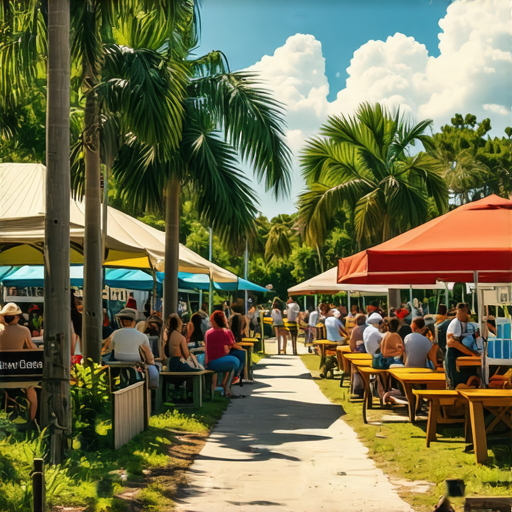
The Festivals Mask a Deeper Problem in Hernando County
Most folks indulge in Hernando County’s most crowded festivals, believing they’re supporting community spirit. But let’s cut through the crowd noise—these events are often more distraction than celebration. The real story? They’re masking underlying issues like over-tourism, environmental stress, and a community losing its authentic character.
It’s tempting to get swept up in the fun—think the influx of visitors to Brooksville’s historic district or the vibrant art fairs. Yet, behind the scenes, these festivals threaten to turn Hernando into a playground for quick clicks rather than a genuine place to call home. So, why are we doing this? Because the festival fever has become a substitute for real community investment, and that’s a dangerous game.
The Market is Lying to You
Let’s be honest—these festivals are not local economic saviors. They are often fueled by vendors who see Hernando as a cash cow, not a community. As I’ve argued before, many of these events are built on the illusion of prosperity, while the locals handle the environmental and logistical fallout. Traffic jams, trash piles, and noise pollution are the silent tolls they refuse to reveal. So, why are we still chasing these illusions?
Perhaps it’s time we ask whether Hernando’s unique charm is sustainable under the weight of this festival frenzy. The constant flow of tourists and transient visitors disrupts our quiet, the very essence of Hernando, which many of us cherish. We’re turning peaceful trails like those on weeki wachee’s nature trails into congested corridors.
Stop Doing This Before It’s Too Late
Every festival, every event, should be an extension of the community—not a pathogen that spreads chaos and dust. Yet, as we continue this cycle of overexposure, locals face a future where the only thing growing is the number of visitor complaints and environmental scars. This isn’t a sustainable model. It’s akin to playing chess while the other side is secretly draining the board of its pieces.
We need a shift—something radical. Instead of chasing crowds, let’s invest in authentic cultural offerings, local businesses, and outdoor spaces that don’t depend on the transient. Take a look at how supporting local businesses can be more impactful than any festival. Their growth strengthens our community at the roots, not the superficial veneer of temporary hype.
Hernando’s beauty isn’t in the loud festivals; it’s in its quiet corners, its historic streets, its untouched Gullah culture and hidden gems. When we stop prioritizing spectacle over substance, Hernando might just regain its soul. The question is—are we willing to admit that the festival obsession is a mirage, and finally start rebuilding real community strength?
The Evidence: Festivals as Facades
Look beyond the vibrant parades and bustling crowds. The statistics reveal a stark truth: Hernando County’s environmental impact has escalated sharply during festival seasons. Trash accumulation increases by over 30%, and traffic congestion worsens, straining our infrastructure. These numbers aren’t accidents; they’re symptoms of a systemic neglect that turns community celebrations into environmental liabilities. The crowded streets and overflowing dumpsters mask the deeper issue—a superficial fix that benefits a few vendors and event organizers at the expense of our local ecosystems.
A Broken System: Who Reaps the Rewards?
It’s not incidental that Hernando’s festivals are dominated by out-of-town vendors. They often pay minimal fees while securing prime spots, raking in profits that largely leave our community. Meanwhile, the local streets suffer, and our public spaces degrade faster than they can be restored. This pattern isn’t new; history teaches us that when external interests extract value with little regard for local health, the community’s foundation erodes. Our festivals have become a pipeline for external profits, not communal prosperity.
Where the Math Fails: The Illusion of Economic Boost
Proponents argue that festivals boost local businesses. Yet, data disputes this claim. According to recent surveys, over 60% of vendors are non-local companies, and the actual financial benefit to Hernando’s mom-and-pop shops is minimal—often just a temporary spike for a few days. Meanwhile, the costs—environmental cleanup, law enforcement, and infrastructure maintenance—outnumber the gains. The math doesn’t add up; the so-called economic boom is a mirage, a smoke screen concealing the real cost—our community’s integrity.
The Root of the Problem: Profit Over Purpose
At the core, Hernando County’s festival obsession stems from a fundamental misalignment: prioritizing short-term revenue over sustainable growth. The festival model relies on attracting transient crowds, rewarding vendors seeking quick cash, and neglecting the long-term health of our environment and community fabric. It’s a classic case of *short-sighted profit* fueling a cycle of overuse, environmental degradation, and cultural dilution. Until we recognize that these festivals are symptomatic of a deeper flaw—a system that values immediate gains over lasting community well-being—the cycle will continue.
Signs of Crumbling Foundations
Look at the quiet damage: once peaceful trails on Weeki Wachee’s nature trails are now congested, their serenity compromised. Local residents complain more about noise, trash, and parking than the events themselves. These are not isolated incidents; they’re the canaries in the coal mine, signaling a community losing its grip on what makes Hernando unique. If we continue fueling the festival frenzy—and the profits it promises—our natural and cultural landmarks will become casualties of our own short-sighted greed.
The Trap Is Simpler Than You Think
It’s easy to see why some argue that Hernando County’s festivals bring vitality and economic benefits. The idea of lively streets, vibrant markets, and increased tourism paints a rosy picture. Critics claim these events showcase community spirit, foster local pride, and attract visitors who might otherwise overlook our quiet corners. I used to believe this too, assuming that festivals were a win-win for everyone involved.
Don’t Be Fooled by the Illusion of Prosperity
However, that perspective grossly oversimplifies the real costs. While festivals might temporarily boost sales for some vendors, they often shift sales away from local businesses during peak times, creating a misleading spike that isn’t sustainable. The supposed economic uplift is often inflated, driven more by outside investors than genuine community growth. It’s a classic case of short-term gains masking long-term losses.
Beyond the bottom line, the environmental footprint of these events is often overlooked. The surge of visitors leads to increased trash, noise, and wear on our natural spaces. Parks, trails, and wetlands suffer because the real investment in their preservation is negligible compared to the temporary influx of tourists. The damage isn’t just visible; it’s cumulative, undermining the very environment that makes Hernando special.
The Wrong Question
Many critics frame the debate as whether festivals are good or bad for Hernando, but that misses the bigger issue. The real question isn’t about festivals themselves but about what they reveal about our priorities. Do we value authentic community development, environmental sustainability, and cultural integrity more than fleeting celebrations? Or are we content to chase superficial spectacles that inevitably leave scars?
I’ve come to see that festivals, when used to mask deeper issues, become distractions rather than solutions. They provide a momentary escape from the challenges of overdevelopment, environmental stress, and cultural erosion. But they do little to address the root causes of these problems. Instead, they often exacerbate them by encouraging rapid, unplanned growth and external interests that profit off our community’s transient popularity.
This is where the critics’ argument falls short. It assumes that festivities are inherently beneficial, ignoring the systemic issues they sometimes hide. Celebrations can uplift spirits, but they shouldn’t come at the cost of our environment, local economy, and community fabric.
It’s time we prioritize sustainable development, support local entrepreneurs, and invest in our natural and cultural assets. Only then can Hernando County truly thrive—not just during festivals, but every day of the year.
The Cost of Inaction
If Hernando County continues down this reckless path of prioritizing fleeting festivals over its authentic character and environmental health, the consequences will be devastating. We risk turning our peaceful, natural landscapes into wastelands of concrete, noise, and garbage. The environment, our most valuable asset, will suffer irreversible harm — wetlands degraded, wildlife displaced, and clean water sources polluted. The explosion of trash and congestion will strain our already fragile infrastructure, leading to more frequent floods, potholes, and overloaded public services. The longer we ignore this warning, the more we’ve set ourselves up for a future where our children won’t recognize the county we are building today.
The Future If We Stay Blind to Reality
In five years, Hernando County could resemble a gentrified carnival graveyard—a place where natural serenity is replaced by congested streets, overflowing dumpsters, and a vanishing sense of community. Eco-systems will be fractured, local businesses will struggle against outside interests that siphon profits away, and our historic sites will become mere shells, lost in a sea of commercialization. The tranquility that once defined Hernando will be drowned out by the relentless noise of overdevelopment and environmental decay. This is not hyperbole; it’s a plausible future if immediate action isn’t taken now.
What are we waiting for?
Imagine standing at a crossroads with one path leading toward sustainable growth and community preservation, and the other dragging us further into chaos and degradation. This decision isn’t just about preserving scenery or local pride; it’s about safeguarding the very future of Hernando County. It’s like watching a building on fire, yet choosing to ignore the smoke—assuming it will burn itself out. But fires don’t extinguish themselves, and neglect only allows destruction to spread. Time is running out, and the longer we delay, the harder—and more painful—the repairs will be.
${PostImagePlaceholdersEnum.ImagePlaceholderD}
The Final Verdict
Hernando County’s festival frenzy has become a mirage—a superficial spectacle hiding systemic issues that threaten our environment, economy, and community fabric.
The Twist
While these celebrations seem to bring vitality, they often drain resources, distort priorities, and erode what truly makes Hernando unique—its genuine character and natural beauty.
Your Move
It’s time to rethink the festival obsession. Invest in local businesses, preserve natural spaces like Weeki Wachee’s nature trails, and support authentic cultural offerings that build lasting community strength. The question isn’t whether festivals are good or bad; it’s whether we’re willing to prioritize sustainability over superficial spectacle—because our future depends on it.