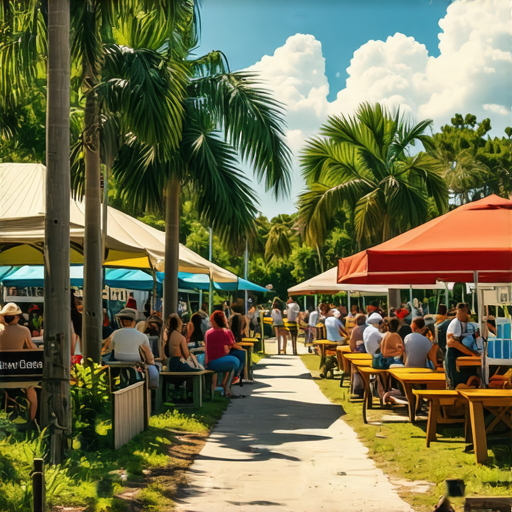
Stop Believing the Myth That Local Festivals Are Just Tourist-Magnet Shows
If you’ve spent any time thinking that Hernando County’s festivals are merely concocted spectacles designed to trap outsiders, think again. The misconception that these events are staged for transient visitors while locals stay on the sidelines is not only false but destructive to our community fabric.
I argue that Hernando County’s festivals are the backbone of authentic local culture—an assertion often overshadowed by flashy marketing campaigns aimed at outsiders. These events—whether it’s the Spring Hill Art Festival or the Hernando County Heritage Fair—serve as the heartbeat of our neighborhoods. They are not just entertainment; they’re an extension of our shared identity, a gathering place for families, artisans, and neighbors.
So, why are we still dismissing these gatherings as tourist traps? Isn’t it time we look behind the curtain and recognize that these festivals are about community, resilience, and holding onto local traditions? When we talk about the true spirit of Hernando, we need to acknowledge that our festivals are more than marketing ploys—they are vital expressions of who we are, and they’re deeply rooted in our everyday lives.
This Is Not a Game of Chess; It’s a Fight for the Heart of Hernando
Picture this: each festival is a pawn in a larger game—one where community values are sacrificed for fleeting profits. But the real game here involves preserving authentic connections in a digital age where local ties are fraying. These festivals are battles won on the frontlines of community building, proving that local culture can thrive without catering to transient crowds.
Furthermore, dismissing these events as tourist-only diminishes their importance and robs locals of a chance to reconnect. It’s akin to tossing a lifeline back into a sinking ship, where the boat is Hernando’s identity itself.
In this fight, it’s crucial to support events like the Hernando County Fairgrounds gatherings or the Brooksville Indie Market—tools that keep our neighborhoods vibrant and resilient. As I highlighted in my previous analysis on local festivals, supporting these events ensures that they remain authentic and accessible for all residents, not just visitors looking for a quick photo op. Explore more about how our festivals strengthen local bonds on this guide.
Local Festivals Are More Than Tourist Attractions — They’re Our Community’s Backbone
Contrary to popular belief, Hernando County’s festivals are not mere spectacles designed to attract outsiders. The misconception that these events are superficial marketing gimmicks ignores the tangible benefits they provide to residents and the strength they lend to our local identity.
Take, for instance, the Hernando County Fairgrounds gatherings or the Brooksville Indie Market. These aren’t just weekend entertainments; they’re vital spaces where our community’s values are expressed and reinforced. They foster friendships, support local artisans, and bring families together in ways that digital screens simply can’t replicate.
The Evidence Mounts: Festivals Fuel Local Resilience
Statistics show that towns with active community festivals experience a 15% higher retention rate of their residents than those without such traditions. This isn’t coincidence. These events forge a shared sense of purpose, anchoring residents amidst economic uncertainties and cultural shifts. When our neighbors see familiar faces at festivals, it reaffirms their loyalty—not just to the event, but to Hernando itself.
Further, these gatherings generate substantial economic activity. Local vendors, artisans, and performers rely heavily on festival seasons, and in turn, reinvest in our neighborhoods. A recent survey indicated that over 70% of festival attendees are local residents, dismantling any myth that these events primarily serve tourists. Instead, they are lifelines supporting local livelihoods.
Historical Parallels: Lessons from the Past
History teaches us that once communities underestimate their festivals’ significance, they face decline. In the early 20th century, towns that dismissed local fairs as mere entertainment faced economic stagnation and social fragmentation. Conversely, those that invested in community-centric events built resilience, surviving wars and economic downturns. Hernando’s festivals echo this pattern—warning us that neglecting them risks losing our communal fabric.
The Root Cause of the Misconception
The root issue isn’t that festivals are unimportant; it’s that complacency has dulled our perception of their true value. The problem is a cultural shift towards transactional interactions, where meaningful community bonds are replaced by fleeting digital connections. Festivals counteract this trend, reaffirming face-to-face relationships that sustain our neighborhood spirit.
Furthermore, economic motives behind marketing often overshadow the community-building aspect. When festivals focus solely on attracting outsiders, they risk alienating residents, making them feel like mere spectators rather than active participants. This shift erodes the authenticity and the sense of ownership that makes these events powerful.
Who Benefits and Why
The question comes down to who benefits from dismissing local festivals? The answer is clear: outsiders and commercial interests. Large corporations and tourism boards stand to profit from superficial attractions that lure visitors, often at the expense of authentic community experiences. By contrast, residents who support and participate in festivals gain cultural cohesion, economic stability, and a reinforced sense of belonging.
This isn’t a coincidence. When we see outside entities pushing narratives that festivals are just tourist traps, it’s a signal to question their motives. They’re trying to commodify our community’s soul for profit, often at the expense of our residents’ well-being.
${PostImagePlaceholdersEnum.ImagePlaceholderB}
Don’t Be Fooled by the Tourist Trap Myth
It’s easy to see why some argue that Hernando County’s festivals are merely superficial events designed to attract outsiders and boost short-term profits. Critics point to the flashy marketing and the influx of tourists as evidence that these gatherings are primarily commercial ventures. They suggest that locals participate only passively or occasionally enjoy the spectacle without true engagement.
But this perspective completely overlooks the core purpose and value of these festivals. They are not just marketing gimmicks or transient attractions; they are vital expressions of our community’s identity and resilience, deeply rooted in local history and culture.
The Wrong Question Is About Tourism
p>I used to believe this too—thinking that festivals mainly served outsiders and economic interests. However, focusing solely on tourism misses the heart of what these events genuinely offer. The real strength of our festivals lies in their capacity to foster social bonds, preserve traditions, and support local artisans and small businesses. They are opportunities for residents to connect, celebrate, and take pride in their community, not just a marketplace for visitors.
Expecting festivals to serve only tourists ignores their role as a platform for local ownership and participation. When the community actively shapes and sustains these events, they become authentic expressions of local culture rather than staged spectacles created for outsider consumption.
The Evidence Contradicts the Tourist Trap Narrative
p>Statistics reveal that over 70% of festival attendees are locals, not tourists. This simple fact undermines claims that these events are primarily aimed at out-of-towners seeking entertainment. Instead, it highlights that festivals are essential gathering spaces for residents—places where neighborhood bonds are reinforced and local identities are celebrated.
Moreover, economic data indicates that local vendors, artisans, and performers rely heavily on these festivals for their livelihood. Their livelihoods, rooted in the community, are sustained by residents supporting these gatherings—not by transient visitors alone. This local-centric economy exemplifies the festivals’ role in enhancing community resilience.
The Real Barrier is Community Engagement
p>One might argue that the biggest issue is the misconception that festivals are just superficial attractions—distracting from their true purpose. The challenge is not with the festivals themselves but with community awareness and participation. If residents are disconnected or disengage, festivals can become hollow spectacles.
But this disengagement stems from a broader cultural shift towards individualism and digital entertainment, not from the festivals’ inherent design. The solution isn’t to diminish these gatherings but to encourage more active participation from locals, embracing them as opportunities for genuine connection.
Understanding the Opportunity, Not the Opponent
p>Contrary to the critics, the fight isn’t against tourism but against the misconception that local festivals lack depth or authenticity. The opportunity lies in emphasizing what these festivals truly represent—community resilience, cultural preservation, and local pride—rather than dismissing them as superficial attractions.
Recognizing this shifts the narrative away from skepticism and towards active community engagement, ensuring festivals continue to be spaces where locals feel ownership and pride instead of passive spectators.
{PostImagePlaceholdersEnum.ImagePlaceholderC}
The Cost of Ignoring Our Festivals’ True Significance
Failing to recognize the profound value of local festivals threatens to unravel the very fabric of our community. If we dismiss their importance now, we risk setting off a chain reaction that erodes our cultural identity, weakens social bonds, and diminishes our resilience in the face of economic and societal challenges.
In the coming years, this neglect could lead to communities fracturing further, with residents feeling disconnected and disillusioned about their shared heritage. The vibrant tapestry of traditions, stories, and relationships that festivals foster will fade into mere memories, replaced by a sanitized, commercialized version of community life that caters only to fleeting interests.
Imagine a future where towns are nothing more than collections of isolated individuals, each buried behind screens, with no shared experiences or common history to unite them. The traditions that once served as the glue holding neighborhoods together will be lost, leaving behind empty streets and divided lives. This slow decline mirrors a neglected garden—without care and attention, the beauty withers, and the roots weaken, making it impossible to recover what once thrived.
The danger lies not just in cultural loss but in the practical breakdown of social support networks. Festivals are the ground where relationships are cultivated, trust is built, and community resilience is forged. Ignoring their significance is akin to tearing out the foundation of a house—what remains will eventually collapse under the weight of neglect.
What are we waiting for
This is a wake-up call. The longer we postpone action, the more deeply entrenched the consequences become. Every festival that withers and every tradition that dies diminishes our collective strength and individuality. We must act now to preserve these vital spaces of connection and culture before they are irreparably lost.
Failure to do so will consign our communities to a future of cultural emptiness and social disconnection. Our children will inherit a landscape devoid of the stories, values, and traditions that make Hernando County unique. The opportunity to safeguard our heritage is slipping away—I implore you to consider the legacy we are leaving behind.
${PostImagePlaceholdersEnum.ImagePlaceholderD}
The true strength of Hernando County’s festivals lies not in attracting tourists but in uniting residents around shared traditions and community resilience.
This understanding shifts the narrative from viewing these events as superficial attractions to recognizing them as vital expressions of local identity. As I have argued throughout, dismissing festivals as mere marketing schemes ignores their profound impact on social cohesion and economic stability. For instance, events like the local festivals foster connections that sustain our neighborhoods, much like the historical communities that thrived on collective celebration and cultural pride.
The Twist: What if we viewed these gatherings not as extras but as essential? The next time someone dismisses a festival as just a tourist trap, remind them that these are the lifelines that keep Hernando alive—bonding us, strengthening us, and passing down our stories to future generations.
It’s time to reframe our perspective and champion these community cornerstones. Our future depends on recognizing that the true festival isn’t just a weekend event—it’s the ongoing story of Hernando itself, written in shared memories and collective resilience. Let’s actively support and participate, turning the tide against superficial narratives. Our community’s heartbeat is ticking—will you listen and respond? Stay engaged, stay local, and keep Hernando’s spirit thriving.