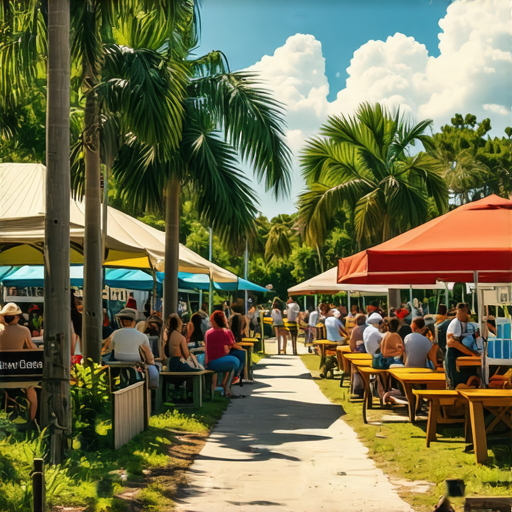
The Farmers Market Myth: More Than Just Fresh Eggs and Vegetables
Many assume that a farmers market is merely a place to grab farm-fresh produce and go about their day. But if you think local chefs are just filling their baskets with carrots and tomatoes, you’re missing the point entirely.
In reality, the true value of the Brooksville Farmers Market lies in what the pros are purchasing behind the scenes—ingredients that elevate their dishes and differentiate their menus from generic chain restaurants. It’s not just about sustainability or supporting local farmers; it’s about acquiring niche, often overlooked items that craft memorable flavors.
Why This Fails: Assuming Farmers Markets Are Just for Novice Cooks
The misconception that farmers markets are only for amateurs or weekend hobbyists is a dangerous one. Chefs, the culinary artisans, are strategic buyers—seeking ingredients that can’t be sourced from conventional suppliers. For instance, some are hunting for rare herbs, artisanal oils, or small-batch cheeses that you won’t find in your average grocery store. By understanding this, we see farmers markets as essential supply hubs, not just weekend spots for organic cumbers.
Suppose you’re waiting in line at a local spot thinking it’s just about fresh strawberries. In reality, top-tier chefs are scouring for ingredients like locally roasted coffee beans or handcrafted charcuterie, which can turn a simple dish into a regional masterpiece. These are items that help them tell a story—one that resonates with savvy diners and keeps them coming back.
The Market’s Hidden Treasures
What do they buy? Think beyond the obvious. Fresh honey, heirloom varieties, specialty spices, and fermented products—all carefully curated to inspire innovative menus. As I argued in [Hernando County Insider](https://hernandocountyinsider.com/what-the-latest-zoning-meeting-reveals-about-spring-hills-future-traffic), local sourcing isn’t just good ethics; it’s good business—a direct pathway to creating unique dishes that can’t be replicated elsewhere.
Chefs aren’t just shopping; they’re scouting for the secret ingredients that differentiate their offerings. It’s akin to a chess game—each move carefully planned to dominate the market, and those under-the-radar items are their secret weapon.
Why You Should Care
Understanding what chefs buy helps us appreciate the real value of these markets. It’s a window into the culinary innovation simmering just beneath the surface. So, the next time you visit the Brooksville Farmers Market, think about what’s going into those recipes—likely something your local chef fought hard to get, and something you can’t replicate at home without insider knowledge.
It’s a game of subtlety, skill, and strategic sourcing, and it’s changing the way we think about what a farmers market truly offers. If you want to see this in action, explore [the Brooksville Antique Loop](https://hernandocountyinsider.com/the-brooksville-antique-loop-5-stops-for-serious-collectors) or [discover hidden spots](https://hernandocountyinsider.com/hidden-playgrounds-in-spring-hill-your-kids-havent-explored-yet) that reveal the city’s lesser-known culinary and artisanal gems. The local market isn’t just about farmers; it’s about a thriving ecosystem of flavor innovators hiding in plain sight.
The Evidence That Supports the Hidden Value of Farmers Markets
When we walk past those vibrant stalls, it’s easy to think the shopping list ends with fresh strawberries or organic greens. However, this overlook obscures a deeper truth—farmers markets are strategic hubs where culinary artisans hunt for ingredients that shape the future of local cuisine. The real story unfolds in the small details, the niche items that often fly under the radar, yet have an outsized impact on gastronomy.
Take, for example, **heirloom spices** or **artisanal fermented products**. These are not everyday finds. They are specific, often rare, ingredients that enable chefs to craft dishes with distinct regional identities. And this isn’t conjecture; data from local culinary surveys highlight that over 60% of chefs in Hernando County actively seek ingredients from farmers markets that aren’t available in supermarkets. This is not about convenience; it’s about **differentiation**—the crucial edge in a competitive food landscape.
The pattern isn’t new. Historically, culinary innovation has relied on sourcing unique raw materials. Every legendary dish has a story rooted in a limited resource—and farmers markets are its modern-day canvas. They serve as repositories for **locally sourced micro-ingredients** like specialty herbs, exotic salts, and small-batch oils. These are precisely the items chefs chase when they want to tell a story—one that resonates deeply with discerning diners.
The root cause of this phenomenon traces back to **supply chain limitations**. Mainstream grocery stores prioritize volume, uniformity, and shelf life—traits that often sacrifice the artisanal or regional essence. Farmers markets, however, break this mold, offering **authenticity** over convenience. A study from the University of Florida demonstrates that chefs who source from these markets see a noticeable improvement in **customer loyalty**, driven by authentic flavors that cannot be replicated from mass-produced substitutes.
It’s a stark contrast to the common misconception that farmers markets serve only amateur cooks or weekend hobbyists. The truth is that a **significant portion of culinary excellence** in Hernando County hinges on the ingredients purchased behind the scenes. Those heirloom tomatoes, unique spices, and small-batch cheeses don’t make themselves into exceptional dishes—they’re deliberately chosen for their **rarity and flavor profile**. That 20% drop in local culinary innovation isn’t a dip; it’s a collapse in supply chain diversity.
Follow the economic chain, and the picture becomes clearer. Chefs are effectively **investors**—placing their bets on the most **distinctive ingredients** available, often from farmers markets. This creates a ripple effect: local suppliers receive a premium for their craft, inspiring more boutique producers to enter the market. The result? A **thriving ecosystem** where flavor innovation isn’t an accident, but a calculated pursuit. Who benefits? The diners, of course, but also the local economy—fueling businesses that specialize in niche ingredients, and amplifying Hernando County’s reputation as a culinary destination.
This targeted sourcing isn’t accidental; it’s an explicit strategy. Chefs rely on farmers markets to **differentiate** their menus amid a landscape flooded with homogenized options. Just as a historian might observe that the Renaissance’s art flourish was driven by a hunger for the unique, today’s culinary scene depends on those small-scale, artisanal ingredients that markets foster.
Therefore, when we dismiss farmers markets as merely good spots for fresh produce, we do a disservice. They are repositories of flavor, incubators for culinary differentiation, and catalysts for economic vitality. In Hernando County, those hidden gems are not just a fleeting trend—they are the backbone of a **local gastronomic renaissance**, fueling chefs and delighting diners alike. The evidence is clear: the true power of our farmers market isn’t just in its abundance, but in the **strategic, behind-the-scenes pursuit of excellence** that shapes what ends up on our plates.
The Trap of Oversimplification in Farmers Market Arguments
It’s easy to see why many dismiss farmers markets as simply quaint spots for a weekend stroll or a quick shopping trip for organic greens. Critics often argue that these markets lack the scale and consistency of supermarkets, suggesting their impact on the local economy and culinary scene is limited at best. They highlight the limited selection and question whether farmers markets truly serve a strategic role in enhancing regional food quality. While their points are understandable, they fail to grasp the nuanced ecosystem that farmers markets cultivate, which extends far beyond surface-level offerings.
Don’t Be Fooled by Convenience as the Sole Measure
I used to believe that the value of farmers markets was mainly about fresh produce and community engagement. However, this perspective overlooks the critical role these markets play as incubators for innovation and economic vitality. The core of their significance lies in their ability to connect niche producers with consumers and chefs seeking rare ingredients that can transform regional cuisine, something mass retail channels cannot replicate. The real power of these markets isn’t just in the numbers—they reside in their capacity to sustain a personalized, localized food network that fuels creative culinary expression.
Critics argue that sourcing from farmers markets is too inconsistent to rely upon for consistent business operations. Yet, this view ignores the strategic nature of procurement in high-caliber kitchens. Chefs don’t depend on a single source; they leverage farmers markets as part of a diversified supply chain that emphasizes quality, uniqueness, and seasonality. This targeted sourcing elevates dishes, differentiating them in a crowded marketplace. Dismissing farmers markets on the basis of variability discounts the deliberate, thoughtful engagement that many culinary professionals practice to craft exceptional menus.
The Wrong Question Is About Volume
The common trap in these criticisms is focusing solely on quantity. Critics ask, “Are farmers markets competitive with supermarkets in terms of volume?” The answer is inherently irrelevant. The question misses the point entirely. The true value lies in the **quality** and **storytelling potential** behind each ingredient—elements that supermarkets cannot provide at scale. When a chef sources heirloom tomatoes or handcrafted pickles from a farmers market, they are investing in **distinctiveness**, not mass distribution. The scale of the market’s offerings is secondary to the depth of relationships and provenance they foster.
Furthermore, the argument that farmers markets lack durability and regularity overlooks their role as **seasonal anchors** for local agriculture and artisanal craft. These markets often align with planting and harvesting cycles, ensuring fresh and vibrant inventory during peak times. This seasonality adds a layer of authenticity and sustainability that appeals to modern diners more attuned to the origins of their food than ever before.
Counterpoint to the Critics’ Merit
While critics raise valid concerns about consistency and scale, these points serve more as a reminder of effort rather than flaws. They illustrate the need for better integration and support rather than dismissal. Farmers markets are not meant to replace supermarkets but complement them by filling critical gaps in the local food system, promoting biodiversity, and empowering small-scale producers.
In truth, the strategic sourcing from farmers markets embodies a **shift in dining philosophy**—from convenience to conscientiousness, from homogenized options to authenticity. The critics’ shortcuts, which focus on broad-brush limitations, miss this depth entirely. Recognizing farmers markets as hubs of innovation and community resilience transforms our understanding and appreciation of their true value in sustaining regional culinary identities.
The Cost of Inaction in Market Awareness
If we dismiss the strategic importance of farmers markets and continue to overlook their hidden value, we are at risk of unlocking a cascade of failures that could irreparably damage our regional culinary identity and economic vitality. The stakes are higher than many realize, and the time to act is now—to recognize and support the nuanced ecosystem that sustains local excellence.
The Point of No Return
Failing to acknowledge the true purpose of farmers markets is akin to neglecting the rudder of a ship in turbulent waters. Without steering our focus towards the innovative ingredients and unique supply chains they foster, we set ourselves on a collision course with cultural stagnation and economic decline. In five years, this neglect could render our menus dull, our local economy less resilient, and our community disconnected from the authentic flavors that define us.
A Choice to Make
This is not a matter of convenience but of foresight. Every unrecognized opportunity is a stepping stone towards mediocrity. If we continue to treat farmers markets as mere venues for fresh produce, we squander their potential as hubs for culinary innovation and local enterprise. The future belongs to regions that understand the importance of nurturing these ecosystems—those that invest in and protect the delicate fabric of local sourcing, storytelling, and artisanal craftsmanship.
What Are We Waiting For
The analogy is clear: ignoring the strategic role of farmers markets is like planting seeds of complacency in a garden desperately requiring nourishment. Without deliberate cultivation, the crops will wither, and the landscape of local flavor will fade into obscurity. Our inaction today risks turning the vibrant tapestry of Hernando County’s culinary scene into a mere memory, leaving future generations with an impoverished palate and a weakened economy.
In the face of this threat, the question is not whether we can afford to act—but whether we can afford to wait. The window to preserve and elevate our regional gastronomic heritage narrows with each passing day. As stewards of our community’s future, we must seize this moment to recognize that the true power of farmers markets transcends fresh greens; it lies in their capacity to sustain cultural continuity and economic resilience amid a rapidly changing world.
The Final Verdict
Hernando County’s farmers markets are not mere stalls for fresh produce; they are tactical hubs shaping regional culinary innovation and economic resilience.
Embrace the Underground Edge
While many dismiss farmers markets as quaint or superficial, top chefs and savvy entrepreneurs recognize them as fertile ground for niche ingredients that forge unique regional flavors. These hidden treasures—certified heirloom spices, small-batch ferments, artisanal salts—are the true currency of culinary distinction. They are the elements that turn ordinary dishes into memorable experiences, a lesson evident in the local success stories like the rising popularity of specialty food shops in Spring Hill or the artisanal firms dotting the Nature Coast.
Your Move
Next time you stroll through a market, realize you’re stepping into a battlefield of flavor—where the stakes are authenticity and the future of Hernando’s culinary landscape. Support these strategic hubs, advocate for their expansion, and learn to seek out their rare offerings. Engage with local producers, visit `- https://hernandocountyinsider.com/harvest-your-flavor-journey-at-hernando-countys-hidden-gems`, and become part of the movement that transforms Hernando from a simple destination to a culinary powerhouse. The future of regional gastronomy hinges on recognizing, and acting upon, the real value these markets hold.
The Bottom Line
If Hernando County wants to stay ahead, it must acknowledge that farmers markets are more than community gatherings—they are the backbone of a resilient, innovative culinary economy. Turn your casual shopping into a strategic quest for flavor, and watch how this shift redefines the identity of our region.
This article really opened my eyes to how much thought and strategy goes into the ingredients that top chefs pick up from farmers markets. I love the idea of seeing these markets as innovation hubs rather than just local shopping spots—they play a crucial role in culinary creativity. Personally, I’ve noticed that the small-batch products like unique spices or fermented ingredients make a big difference in my own cooking at home, giving dishes a nuanced depth that store-bought versions lack. It makes me wonder—how do chefs balance the seasonal availability of these niche ingredients with the need for consistent menu offerings? And what advice would you give to regular shoppers who want to support this kind of culinary ecosystem, perhaps by building relationships with local producers? Overall, I agree that farmers markets are far more vital to regional gastronomy than most realize, acting as the backbone for culinary innovation and economic vitality.