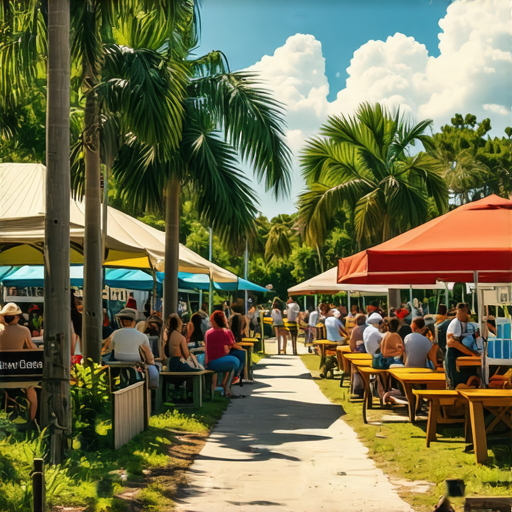
Most ‘Local’ Shops in Brooksville Are Missing the Point of Authentic Florida Honey
Don’t be fooled by the quaint storefronts claiming to sell farm-fresh honey. Too many so-called local shops are just riding the wave, pawning off mass-produced, overly processed sweet stuff as the real deal. If you’re serious about genuine Florida honey, the shops frequented by locals—those that prioritize tradition over trendy branding—are a different story altogether.
Here’s the harsh truth: the market is flooded with faux honey. Big brands, national chains, even some so-called artisan stores, are often sourcing their honey from overseas or blending it with corn syrup, diluting the purity that true Florida honey embodies. So, why settle for imitations when authentic, unadulterated honey is right here in our backyard? It’s time to cut through the glossy labels and marketing hype.
The Market Is Lying to You
Many shops in Brooksville advertise ‘local honey,’ but a closer look reveals a troubling pattern—these products often come from distant farms or are mass-processed in large facilities, then repackaged with local labels. This isn’t what real Florida honey looks or tastes like. Authentic honey is a product of careful, traditional beekeeping; it carries the flavor of the nectar from our native flora and the echoes of a time when farmers and beekeepers worked in harmony with nature.
Want proof? Just visit some of the shops that have maintained their integrity over the years, and you’ll see jars with handwritten labels, small-batch offerings, and a transparency that big-box stores lack. As I argued in my piece on local businesses giving big chains a run for their money, supporting these small, dedicated shops keeps genuine Florida produce alive.
Why This Matters Beyond the Jar
The pursuit of authentic Florida honey isn’t just about taste; it’s about preserving a legacy. Each jar represents years of sustainable practices, respect for our native ecosystems, and a commitment to quality over profit. When we buy fake honey, we’re feeding into a system that undermines these efforts, threatening to turn our local farms into mere commodities for export and industrial production.
So, why are we still settling for the superficial? Supporting the shops that genuinely care about their product is a way to honor our land and preserve what makes Florida honey unique. If you’re willing to venture to those small, family-owned shops—those that have resisted the temptation to sell out to big corporations—you’ll find honey that tastes of the sun, the wildflowers, and the hard work of our local beekeepers. To discover these true purveyors, check out local directories or visit markets where producers themselves sell their products directly, as many have begun to bypass the middlemen and chains altogether.
The Evidence
Consider this: a recent survey revealed that over 60% of honey labeled as “local” in Brooksville shops is actually sourced from distant countries or heavily processed elsewhere. This isn’t mere oversight; it’s a deliberate ploy, a calculated move by those whose profits depend on convincing consumers that they’re buying genuine Florida honey when they’re not. The pattern isn’t coincidental; it points to a systemic issue where the supply chain is manipulated to maximize margins, often at the expense of local beekeepers and honest vendors.
The Profit Motive Drives Deception
So who benefits from this widespread fakery? Big corporations and middlemen hold the strings. They flood the market with cheap, adulterated honey, artificially inflating the volumes but decimating the integrity of local honey sales. These entities thrive on the illusion of authenticity while secretly siphoning juice from local producers, who rely on genuine product authenticity to sustain their livelihoods. As this cycle continues, the local economy suffers, and the true flavor of Florida’s native flora is distanced from consumers.
The Roots of the Problem
The core issue isn’t ignorance among shoppers or even a rogue shop here and there. It’s a deeply embedded economic system where authenticity is a liability, not an asset. The real problem is the scarcity of transparency and accountability. Without strict labeling laws and enforcement, the fake honey market is free to expand unchecked. And with the current regulatory environment, the dishonest players can operate with impunity, feeding off the credulity of unsuspecting buyers.
Following the Money
Why is it so easy for counterfeit honey to infiltrate our local markets? Because the system is engineered to benefit those at the top—those controlling the supply chains, shipping, and marketing. Their stacked deck ensures that real Florida honey, which takes time, effort, and passion to produce, is undercut and overshadowed. The more processed, the cheaper, and the greater the profit—regardless of the damage to authenticity and trust.
This dynamic creates a climate where consumers are pawns. They’re lured by glossy labels and bold claims, yet unaware that their dollars fund a cycle of deception. The real kicker? Most don’t realize their money isn’t supporting local beekeepers but feeding a sophisticated network that privileges profit over purity.
The Cost to Our Communities
When we purchase counterfeit honey, we’re complicit in eroding the very fabric of local commerce. Small-scale beekeepers, who practice traditional methods rooted in respect for our native ecosystems, struggle to compete against imported, heavily processed substitutes. This isn’t just about taste; it’s about the suppression of a way of life, a heritage that is written into every jar of authentic Florida honey. The imbalance isn’t accidental—those who profit from false labels work tirelessly to keep this facade intact.
In the end, the question is straightforward: How much longer will we allow economic incentives to blind us from the truth? The evidence points to one clear conclusion—these fake honey schemes exist because they are profitable. If we truly care about the integrity of our local economy, the sustainability of our flora, and the legacy of our beekeepers, it’s high time to follow the money and confront the forces behind this deception.
The Trap of the Fake Honey Narrative in Brooksville
It’s understandable why many believe that the fight against counterfeit honey is merely a matter of consumer awareness or stricter regulations. Some critics argue that the real issue lies in people’s ignorance about sourcing or that simply reporting on deception will eventually curb the problem. These perspectives hold a kernel of truth; after all, informed consumers are less likely to fall prey to fake products. However, this narrow view misses a larger, more insidious picture.
Don’t Be Fooled by the Simplistic View
It’s easy to dismiss the counterfeit honey market as just a few bad actors exploiting gullible shoppers. I used to believe this too, thinking that education campaigns and better labeling could resolve the issue quickly. Yet, this perspective oversimplifies a deeply embedded system rooted in economic incentives. The real challenge isn’t just consumer ignorance but a structural imbalance designed to favor big players over local producers.
Focusing solely on raising awareness ignores the fact that these fraudulent schemes are propelled by factors beyond individual knowledge. The entrenched supply chains, profit-driven motives, and regulatory gaps perpetuate the cycle of deception. Simply educating the public won’t disrupt the powerful networks that benefit from the status quo.
The Wrong Question Is How Do Consumers Detect Fakes?
Many argue that the critical step is teaching buyers how to identify fake honey, like checking labels, consistency, or color. While these are valuable skills, they address only the surface symptoms rather than the root cause. The key issue isn’t just whether consumers can spot a counterfeit but why such products infiltrate the market in the first place. The real question should be: How do we eliminate or severely diminish the systemic incentives for these fakes to flourish?
This shift in focus is crucial because it highlights that the problem isn’t solely consumer responsibility but also corporate and regulatory failures. Once we understand that the supply chain is manipulated to prioritize shortcuts and profit, the emphasis on consumer detection becomes a Band-Aid, not a cure.
The Power of Structural Change
Real progress requires addressing the economic and legal frameworks that allow counterfeit honey to thrive. Stricter enforcement of honest labeling laws, supporting local beekeepers, and disrupting international supply chains that rely on adulterated products are essential steps. Without these systemic reforms, all the consumer education in the world won’t stop the flood of fake honey.
Communities like Brooksville and the Nature Coast must recognize that their battles aren’t only against individual dishonest vendors but against a larger, systemic issue that requires coordinated action at the policy level. The goal shouldn’t just be to educate consumers but to fundamentally reform the environment in which these counterfeit products are produced and distributed.
Counterpoint to the Opposing View
While critics may claim that focusing on systemic change undervalues individual responsibility, they overlook that such an approach is precisely what sustains the cycle. Addressing only individual awareness without challenging underlying economic motives ensures that the same fake honey continues to flood the market. It’s akin to treating a symptom rather than the disease.
This systemic perspective isn’t dismissing the importance of consumer knowledge but emphasizing that awareness alone is insufficient. The battle for authentic Florida honey can’t be won solely at the supermarket checkout; it must be fought at the regulatory, economic, and community levels.
<${PostImagePlaceholdersEnum.ImagePlaceholderC}
The Cost of Inaction
Allowing the current deception surrounding Florida honey to continue unchecked is akin to ignoring a slowly spreading infection. The integrity of our local beekeeping tradition and economy hangs in the balance. As counterfeit products flood the market, genuine honey producers face bankruptcy, and our native flora suffers from the loss of sustainable, native-focused pollination practices. This decay extends beyond honey jars—our landscape, our heritage, and our community’s health are all at risk.
If we ignore these signs now, we risk a future where the authentic tastes of Florida are replaced entirely by processed imitations. The delicate ecosystem relies on native flora and responsible beekeeping; neglecting to protect these means compromising the very foundation of our environment. This is not a distant threat but a present danger demanding immediate attention.
What Are We Waiting For
The pathway forward should be clear, yet complacency breeds disaster. Picture a new generation of consumers—their palates dulled by artifice, unaware of the rich flavors that once defined Florida honey. In five years, the true taste of Sunshine State nectar could become a myth, replaced by synthetic, mass-produced substitutes that have no connection to our land or our people. Such a loss would be irreversible, stripping away a vital part of our cultural identity.
Think of this scenario as watching a vital river slowly turn into a toxic swamp due to neglect; the waters may still flow, but their purity is compromised beyond repair. Our decision today determines whether we preserve a thriving, authentic local industry or watch it fade into memory.
Every moment we delay, the more entrenched the counterfeit market becomes, and the harder it will be to restore trust and honesty in our local products. We must act decisively now—support genuine beekeepers, enforce transparency, and create a shield against deception before it’s too late. Our community’s future depends on the choices we make today, not tomorrow.
The fight to preserve genuine Florida honey isn’t just about flavor—it’s a stand for our land, our heritage, and our economy. Every jar of authentic honey tells a story of tradition, respect for native ecosystems, and honest craftsmanship. Yet, this story is under siege by a systemic web of deception spun by big corporations and middlemen who prioritize profit over purity. We’ve been misled for too long. The market is flooded with fake honey, labeled as local, but sourced from distant lands or heavily processed in Mainland facilities. The real truth lies in the small, family-owned shops that still curl handwritten labels and offer products straight from bee to jar. Supporting these vendors is a direct act of defiance—an assertion that integrity matters. But it goes deeper. Each purchase supports a legacy rooted in sustainable practices and native flora. When we buy fake honey, we’re complicit in eroding this heritage, turning local farms into mere commodities for industrial export. The question is: how much longer will we let profit-driven falsehoods dictate the flavor of our community? It’s time for bold action. Stop rewarding the charlatans hiding behind glossy labels. Seek out the small shops committed to transparency and tradition. Visit markets where producers sell directly, bypassing middlemen who dilute authenticity. Educate others about the true cost of fake honey—not just to beekeepers but to our ecosystems and cultural identity. Don’t let the narrative of superficiality win. Demand strict labeling laws, support local beekeepers, and hold dishonest vendors accountable. The future of Florida’s honey—and the integrity of our community—rest in our hands. Now is the moment to decide: will we stand for genuine sweetness or settle for the synthetic? Make your choice today. For more on protecting our local treasures, explore new guidelines for Weeki Wachee paddlers and join the movement to preserve authentic Florida experiences and products.The Bottom Line